Product information
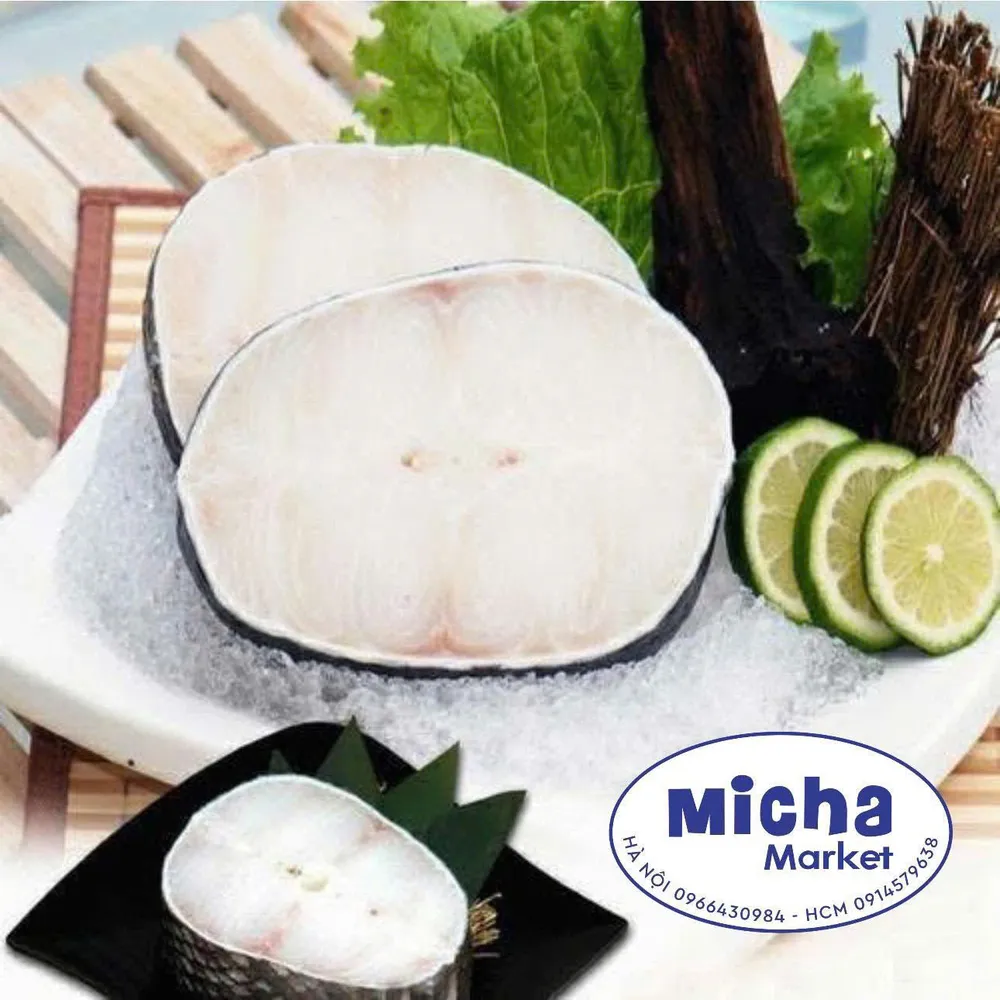
Patagonian Toothfish. Category: toothfish. Nami quotes retail and wholesale prices by quantity. Buy at MICHA MARKET, Ho Chi Minh City, or order for delivery.
What is "French cod"?
"French cod" or "Antarctic cod", whose English name is Patagonian Toothfish, is known internationally as mero (sea bass) in Japan or Chilean sea bass, and is a deep-sea cold-water fish. It belongs to the family Nototheniidae of the order Perciformes and is distributed in the waters of the Antarctic.
The fish is caught in the waters of northern Patagonia, Chile and around the Antarctic.
In Vietnam, it is commonly called "French cod" or "Antarctic cod", because large fishing vessels such as those of Sapmer catch it and ship it to their plant in France, from where it is exported to many places, hence the name "French cod".
Toothfish is truly a special fish. Although it is an oily fish, it does not taste greasy, and its thick, large flakes melt in your mouth.
Nutritional value of toothfish
Toothfish contains many beneficial nutrients and is relatively low in calories. Just 100g of toothfish provides more than 35% of the protein the body needs each day, equivalent to about 85 calories, along with plenty of omega-3 fatty acids.
A rich source of B vitamins
85g of toothfish provides more than 30% of B vitamin needs. It is also rich in vitamin B12, which contributes to the formation of red blood cells and DNA. The fish is also a source of vitamin B6 and niacin, two vitamins needed for the body's metabolism. B vitamins play an important role in the body, contributing to nutrient metabolism and the release of energy from food, and toothfish is a rich source of B vitamins.
It contains many beneficial nutrients and is relatively low in calories because it is a lean fish. As a result, toothfish both nourishes the body and helps with effective weight loss.
Toothfish contains several important minerals such as phosphorus and selenium. Phosphorus is an important component of bones and teeth, while selenium helps build and protect DNA. An 85g serving contains about 20% of the phosphorus and 40% of the selenium needed by an adult.
Toothfish is a good and necessary food for children's development. It is well suited to children's daily meals, including for babies who are starting solids.
Toothfish is high in protein and low in fat, calories and carbs. It is one of the healthy ingredients in a child's diet from the time the child can start eating solid food, usually from 9 months of age.
In addition, toothfish contains large amounts of important minerals such as selenium, which helps regenerate and protect DNA. Phosphorus plays an important role in the formation and development of a child's skeleton. Toothfish also provides omega 3 fatty acids that are good for the child's brain.
Toothfish steaks are commonly used for
- Pan-seared toothfish with miso sauce
- Salt-grilled toothfish
- Fish with garlic butter sauce or teriyaki sauce
Steamed fish with mushrooms, soy sauce, spring onion and ginger.
Deep-fried with garlic-chilli fish sauce and served with rice, simple yet delicious.
Toothfish congee is very good for children
- Toothfish in tomato sauce
Toothfish salad with orange sauce.
Toothfish meat is firm with a rich, natural sweetness, high in protein, and fragrant and rich when eaten. In particular, toothfish meat does not have the fishy smell of other fish. It is highly nutritious, especially in protein, selenium and phosphorus. Just 100g of toothfish provides more than 35% of the protein the body needs each day, equivalent to about 85 calories, along with plenty of omega-3 fatty acids.
Cod is a marine fish of the genus Gadus, capable of migrating long distances to spawn and feed. This fish usually lives deep in the ocean, making it very difficult to harvest and catch.