Product information
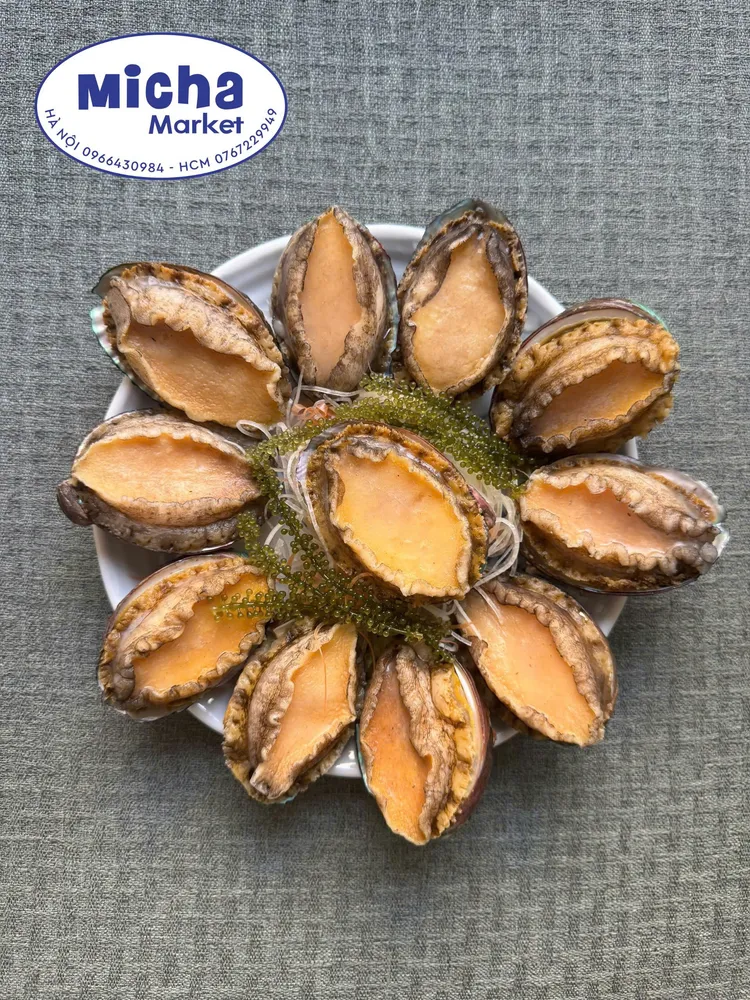
Abalone - origin China. Pack: 1kg. Nami quotes retail and wholesale prices by quantity.
What is abalone?
- Abalone is a hard-shelled mollusc of the family Haliotidae, genus Haliotis. It has a tough, flexible body and a small foot, and usually clings firmly to rock surfaces on the seabed.
Abalone lives mainly in the deep waters of the Indian Ocean and the Pacific Ocean, where salinity of 2% to 3% is especially suitable for adult abalone. In Vietnam, abalone is found mostly in the central coastal waters such as Nha Trang, Phu Yen, Quy Nhon, Ninh Thuan, etc.
- When young, abalone usually lives near the shore, then moves to deeper waters, hiding under submerged rocks. The deeper on the seabed abalone lives, the higher its quality.
- Harvesting abalone is not only difficult but also requires special techniques, as many cling tightly to large rocks and must be detached carefully. This is one of the reasons abalone is expensive, on a par with other rare seafood delicacies such as bird's nest.
- Abalone reproduces sexually, usually spawning in the warm season with up to millions of eggs per year. In the cold season, by contrast, it stops spawning and conserves energy.
Abalone meat is prized for its crunchy texture, sweet and fragrant flavour and nutritional value, making it a valued ingredient in fine dining.
Nutritional value of abalone
Abalone is a premium seafood rich in protein, vitamins and essential minerals such as calcium, iron, potassium, zinc and beta-carotene. It is low in fat and contains almost no cholesterol, which is very good for health.
100g of steamed abalone contains about 189 kcal and the following nutrients
Protein: 19.6g
Fat: 6.78g
Carbohydrate: 11g
Calcium: 37mg
Iron: 3.8mg
Magnesium: 56mg
Phosphorus: 217mg
Potassium: 284mg
Vitamin C: 1.8mg
Folate: 14µg